
Hyundai Elantra (CN7): Brake System / Master Cylinder
Components and components location
| Components |
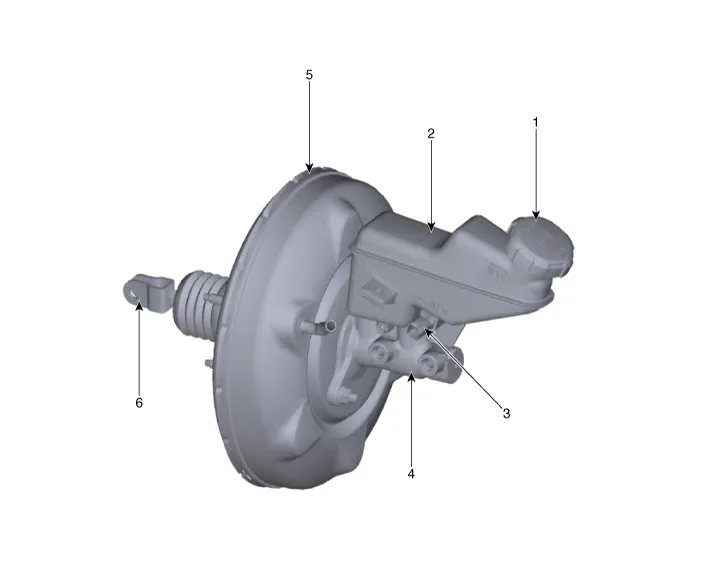
| 1. Reservoir cap 2. Reservoir 3. Brake fluid lever sensor | 4. Master cylinder 5. Brake booster 6. Push road |
Repair procedures
| Removal |
| 1. | Turn ignition switch OFF and disconnect the negative (-) battery cable. |
| 2. | Remove the brake fluid from the master cylinder reservior with a syringe.
|

| 3. | Remove the battery. (Refer to Engine Electrical System - "Battery") |
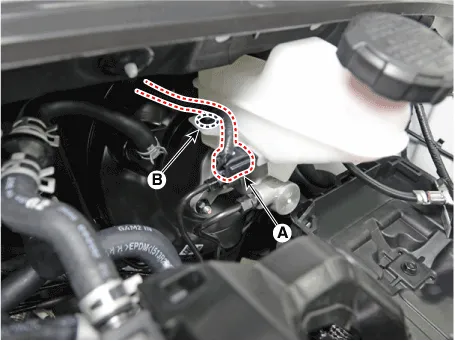
| 4. | Disconnect the brake fluid level sensor connector (A) and then removing the wiring clip (B).
|
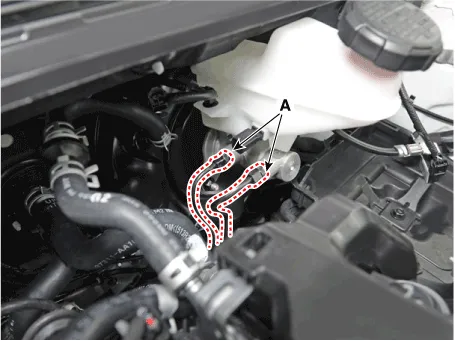
| 5. | Separate the brake tube (A) from the master cylinder by loosening the tube flare nut.
|
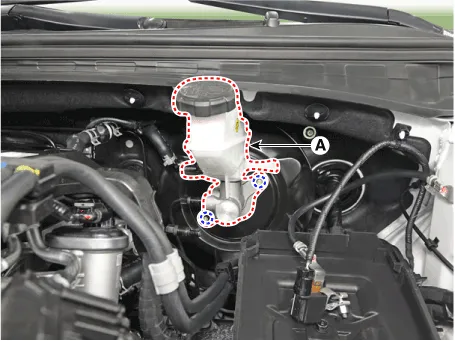
| 6. | Remove the master cylinder (A) after loosening the master cylinder nuts.
|
| 1. | Turn ignition switch OFF and disconnect the negative (-) battery cable. |
| 2. | Remove the brake fluid from the master cylinder reservior with a syringe.
|
| 3. | Disconnect the brake fluid level sensor connector (A).
|
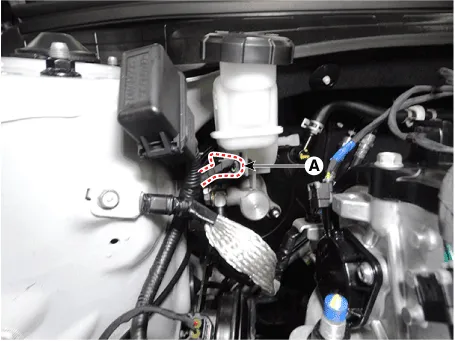
| 4. | Remove the brake tube after loosening the mounting bolts (A).
|
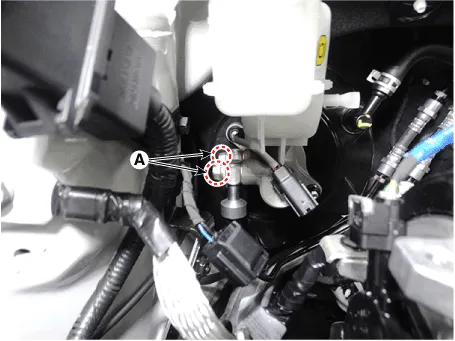
| 5. | Remove the master cylinder (A) after loosening the mounting nuts.
|
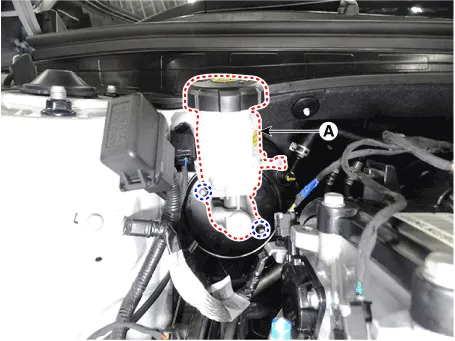
| Installation |
| 1. | To install, reverse the removal procedure.
|

| 2. | After installation, bleed the brake system. (Refer to Brake System - "Brake Bleeding Prcoedures") |
| 3. | Check the brake oil leakage and pedal operating condition. |
Components and components location Components1. Reservoir cap2. Reservoir3. Brake fluid lever sensor4. Master cylinder5. Brake booster6. Push road Repair procedures Brake Booster Operating Test1.
Components and components location Components Repair procedures RemovalBrake Tube [Engine Room]1.Disconnect the brake fiuid level switch connector, and remove the reservoir cap.
Other information:
Hyundai Elantra (CN7) 2021-2026 Service Manual: Start/Stop Button
Components and components location Component Repair procedures Removal1.Disconnect the negative(-) battery terminal.2.Remove the AVN Head unit.(Refer to Body Electrical System - "AVN(Audio Video Navigation) head unit")3.Loosen the mounting screws and remove the start/stop button (A).
Hyundai Elantra (CN7) 2021-2026 Service Manual: Auto Defogging Sensor
Description DescriptionThe auto defogging sensor is installed on the front window glass. The sensor judges and sends signal if moisture occurs to blow out wind for defogging. The air conditioner control module receives signal from the sensor and restrains moisture and eliminate defog by controlling the intake actuator, A/C, auto defogging actuat
Categories
- Manuals Home
- Hyundai Elantra Owners Manual
- Hyundai Elantra Service Manual
- Front Bumper
- Fuse/Relay Panel Description. Engine compartment fuse panel
- Engine Control / Fuel System
- New on site
- Most important about car
