
Hyundai Elantra (CN7): Body Electrical System / Auto Lighting Control System
Description and operation
| Description |
| 1. | Do not add another device on top of this device. |
| 2. | Be sure to switch to manual during poor visibility climate, such as fog, heavy rain, or cloudy weather. |
| 3. | Illumination intensity in an actual vehicle is not always constant, and lamp ON/OFF time may very depending on the climate, season, and surrounding environment. |
| 4. | Use this system only during sunrise and sunset period, and manually control lamp ON/OFF for general conditions. |
| 5. | Error may occur if light block coating that may change interior illumination is applied. |
Components and components location
| Component Location |
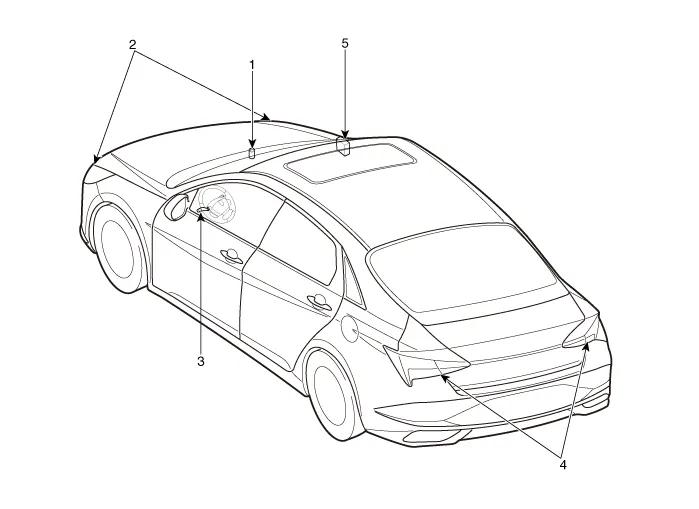
| 1. Auto light sensor 2. Head lamps 3. Lighting switch (Auto) | 4. Rear combination lamps 5. Integrated body control unit (IBU) |
Specifications
| Specifications |
|
Items
|
Specifications
| |
| Rated voltage | 5V | |
| Load | Max. 1mA (Relay load) | |
| Illuminations (LUX) | 100 | 0.76 ± 0.17V |
| 150 | 1.3 ± 0.30V | |
Schematic diagrams
| Circuit Diagram |
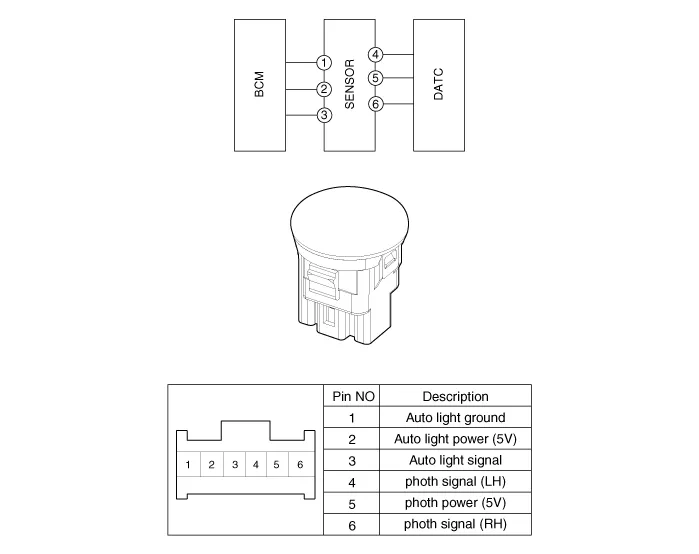
Auto Light Sensor
Repair procedures
| Inspection |
|

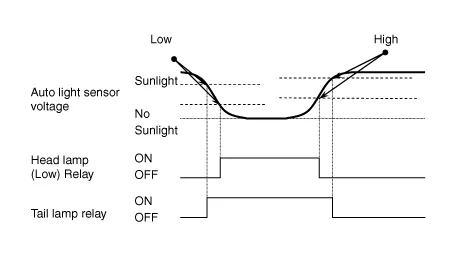
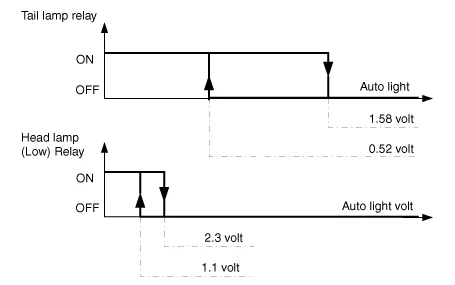
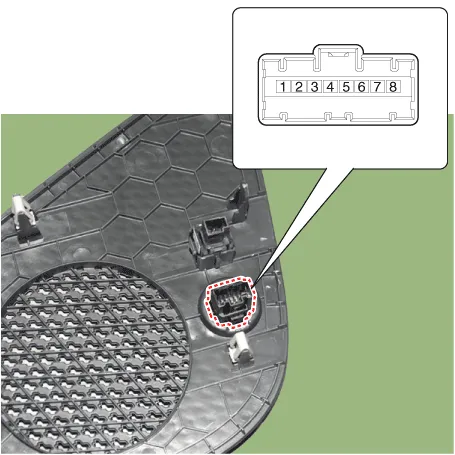
| Removal |
|
| 1. | Disconnect the negative ( - ) battery terminal. |
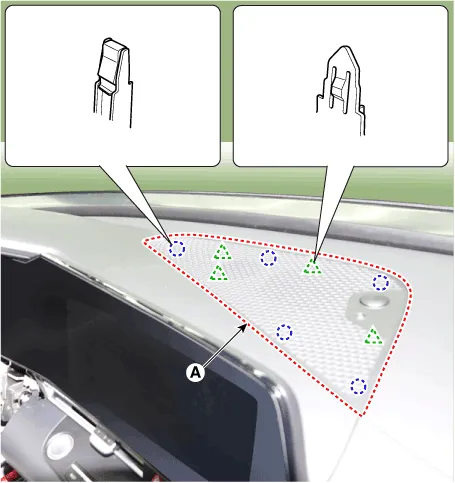
| 2. | Using a remover and remove the crash pad center speaker grille (A).
|
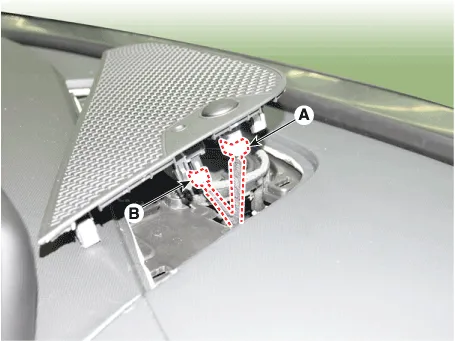
| 3. | Disconnect the auto light sensor connector (A) and security sensor connector (B).
|
| Installation |
| 1. | Connect the auto light sensor connector and security sensor connector. |
| 2. | Install the crash pad center speaker grille. |
Repair procedures RemovalMood lamp unit1.Disconnect the negative (-) battery terminal.2.Remove the main crash pad assembly.(Refer to Body - "Main Crash Pad Assembly")3.
Components and components location Component Location1. Head lamp leveling actuator2. Head lamp leveling switch Head Lamp Leveling Switch Schematic diagrams Schematic Diagrams Repair procedures Replacement1.
Other information:
Hyundai Elantra (CN7) 2021-2026 Service Manual: Rear Combination Lamp
Repair procedures RemovalOutside Combination Lamp1.Disconnect the negative (-) battery terminal.2.Remove the combination lamp cover (A).3.Disconnect the rear combination lamp connector (A).4.Loosen the mounting nuts and remove the rear conbination lamp (A).
Hyundai Elantra (CN7) 2021-2026 Service Manual: Troubleshooting
TroubleshootingProblem Symptoms TableBefore replacing or repairing air conditioning components, first determine if the malfunction is due to the refrigerant charge, air flow or compressor.Use the table below to help you find the cause of the problem. The numbers indicate the priority of the likely cause of the problem.
Categories
- Manuals Home
- Hyundai Elantra Owners Manual
- Hyundai Elantra Service Manual
- Auto Hold. Warning messages
- Instrument Cluster
- Vehicle Information
- New on site
- Most important about car
