
Hyundai Elantra (CN7): Engine Control System / CVVT Oil Control Valve (OCV)
Description and operation
| Description |
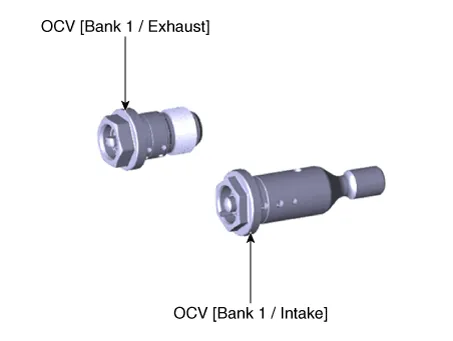
Repair procedures
| Removal and Installation |
| 1. | Remove the CVVT oil control valve. (Refer to Engine Mechanical System - "CVVT & Camshaft") |
| 2. | Install in the reverse order of removal. |
Description and operation DescriptionPurge Control Solenoid Valve (PCSV) is a solenoid valve and is installed on the surge tank and controls the passage between the canister and the intake manifold.
Description and operation DescriptionCVVT (Continuous Variable Valve Timing) system advances or retards the valve opening and closing timing of the intake or the exhaust valve in accordance with the ECM control, calculated by the engine speed and the load.
Other information:
Hyundai Elantra (CN7) 2021-2026 Service Manual: Heater & A/C Control Unit (Manual)
Components and components location Components[This illustration shows the LHD type. RHD type is symmetrical.][Connector A] Pin No Function Pin No Function 1Low (Register specifications)4Middle Low (Register specifications)2Common (Register
Hyundai Elantra (CN7) 2021-2026 Service Manual: Repair procedures
Variant Coding When you need variant coding:– Replace Front View Camera with a new one※ EOL Variant Coding and calibration required for new replacementFront View Camera Variant CodingFront view camera variant coding makes it possible to operate functions for each vehicle type.
Categories
- Manuals Home
- Hyundai Elantra Owners Manual
- Hyundai Elantra Service Manual
- Front Bumper
- Rear Seats
- Fuse/Relay Panel Description. Engine compartment fuse panel
- New on site
- Most important about car
